Seattle and Tacoma
Northwest Seaport Alliance terminals and cross-border carriers.
Los Angeles and Long Beach drayage
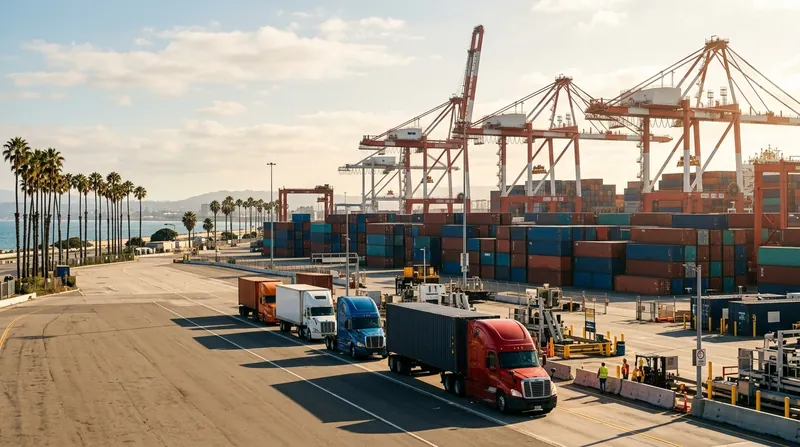
The twin ports of Los Angeles and Long Beach move a huge amount of drayage, and the work is shaped by gate timing, registries and chassis. Here is what Dispatch Board does for a carrier there, and what it does not.
The Port of Los Angeles and the Port of Long Beach sit side by side on San Pedro Bay and are run by separate port authorities. Their terminals include Pier 400, TraPac, Fenix, Long Beach Container Terminal and Pier T, and that list is not complete. Each terminal has its own gate rules, so a driver can be fine at one and early or late at the next. Confirm current procedures with each terminal.
Dispatch Board keeps a list of terminals with their gate hours, closures, appointment rules and slot capacity. You enter them; there is no live link to terminal systems. Plan day then avoids a move timed into a shut gate, and hold alerts appear before a driver is sent to a box that cannot be released.
PierPASS is a not-for-profit set up by the terminal operators. It runs the OffPeak program, and a Traffic Mitigation Fee applies to cargo moved at peak hours, so the hour a box moves can change what it costs. We do not quote fee amounts or hours here, because they change; check pierpass.org. We also do not integrate with PierPASS. What Dispatch Board gives you is the ability to see appointment windows and gate hours on the same board as the load, and to carry accessorial charges on the invoice if you pass these fees on to the customer.

In a busy bay, containers wait. Per diem is therefore shown by day, with the reason: a terminal closure, a hold, the container not available, a later appointment, a late customer delivery, or nothing on record. One click bills the customer’s share to the load or a replacement invoice, and a dispute letter goes to the line with dates, reasons and a packet of tracking events, appointments and closures. You record the answer, waived, partly waived or denied, and see what you won back.
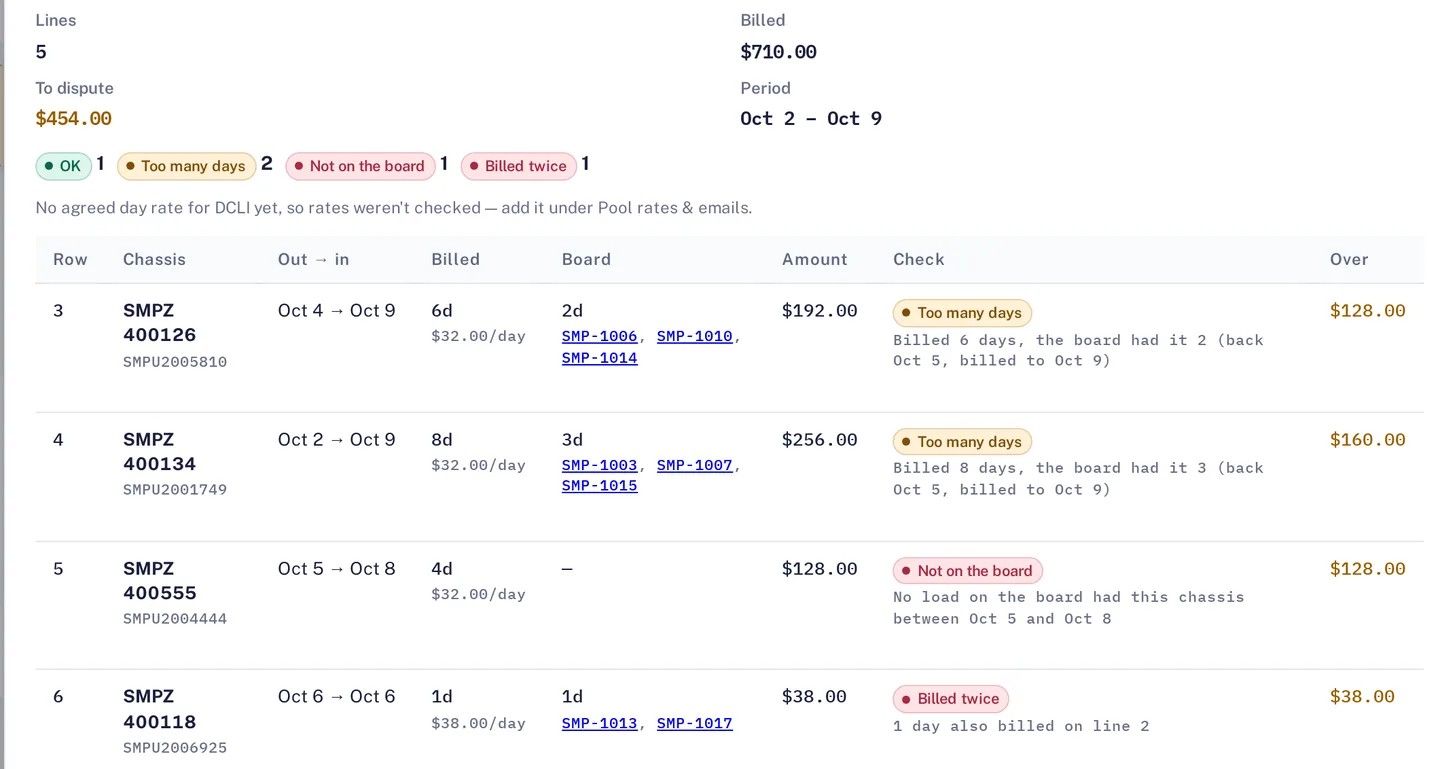
Chassis are a separate cost. The bill checker reads DCLI, TRAC and Flexi-Van invoices against when your own loads had the chassis and produces a dispute letter and a CSV. The missed-charge finder looks for billable items that were never invoiced, and the Money Check puts the totals into one figure with an optional Monday email.
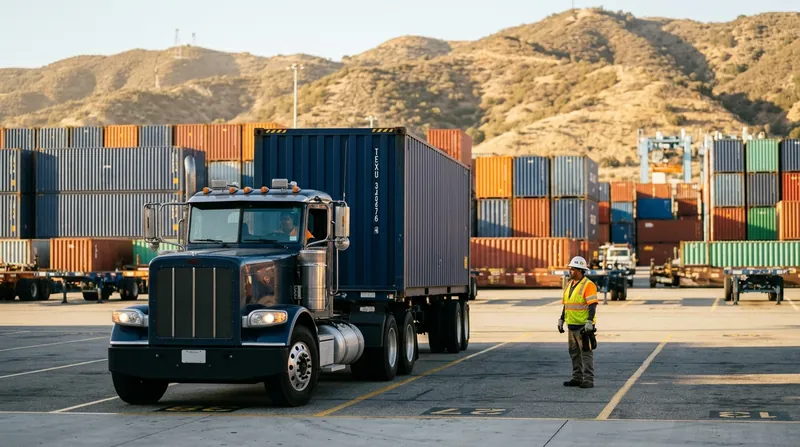
Container tracking runs through Terminal49 for availability and last free day where it covers your line and terminal. The Port of Los Angeles keeps a Drayage Truck Registry that terminals use to decide whether a truck may enter, so compliance records matter. Dispatch Board stores truck, chassis and trailer records with insurance and registration, and a compliance calendar for expiries. It does not submit registry paperwork for you, and we do not claim it meets any California rule by itself. Check requirements with the ports and the state.
Many trucks in this market are owner-operators. Settlements cover employee drivers, owner-operators and carriers, with deductions carried forward, factoring entries, advances and reserves, and PDF statements for drivers in the app. Settlements are on the Medium plan and above. Distances can be in miles, and loads, invoices and pay can be in USD or CAD.
IFTA reports with fuel card imports, DVIR inspections and maintenance schedules with work orders are included, and Plan day applies 11 hours driving and 14 on duty. GPS can come from Samsara, Motive or One Step GPS. We have not built California-specific features such as state emissions reporting or sales tax; we are a Canadian company and the product started with Canadian ports.
There is no automatic appointment booking, no EDI and no QuickBooks Desktop sync. Accounting sync is QuickBooks Online and Xero. See per diem and detention and Seattle and Tacoma for related pages.
Self sign-up gives you a company with sample data and a get-started checklist, so you can look around before you enter anything of your own. Then bring in your real freight: import drivers, trucks, chassis, customers, rate tables and loads from Excel, CSV or a PDF rate sheet. The importer matches columns by heading, checks every row before saving and flags duplicates.
Add your terminals and their gate hours, invite your drivers to the driver app, and run a real week alongside your current system. The Help Center has a guide for every screen. A bar at the top of the board shows the days left in the 14-day trial, and the account owner gets an email two days before it ends. Plans are month to month, and you can download a backup file and a CSV of your loads at any time.
Questions
No. You can see appointment windows and gate hours on the board and put fees on invoices as accessorials, but there is no PierPASS integration.
No. It stores registration, insurance and expiry records and warns you before they lapse.
Yes. Loads, invoices and pay can be in USD or CAD, and distances in miles or kilometres.
Yes, for DCLI, TRAC and Flexi-Van, against the dates your own loads had the chassis.
Yes, 14 days with no card. Plans are per truck and priced in Canadian dollars.
Northwest Seaport Alliance terminals and cross-border carriers.
Chassis records and a bill checker for DCLI, TRAC and Flexi-Van.
A reason for every charged day, rebill and dispute letters.
Every company gets 14 days free with no card. Import a week of your own freight and judge it yourself.