Small drayage carriers
Owner-run fleets of a few trucks leaving spreadsheets behind.

Growing fleets
Past about fifteen trucks the owner can no longer hold the day in one head. This page covers the parts of Dispatch Board that matter when several dispatchers, more customers and mixed driver types share one operation.
Dispatcher and admin logins are unlimited on every plan, so adding a second or fifth person to the office changes nothing on your invoice. Everyone works from the same timeline, Kanban columns and live map, so the question “who has that box?” is answered on screen. Dragging a load onto a truck or driver assigns it and can be undone.
Plan day drafts the fleet’s day in one click and explains each pick. Dispatchers pin the rows they have already decided and let the planner place the rest. Hard limits are applied before a pick is offered: licences, endorsements, TWIC, 11 hours driving and 14 on duty. The planner reports the empty miles and late minutes it saved, so you can judge whether it helps your lanes.

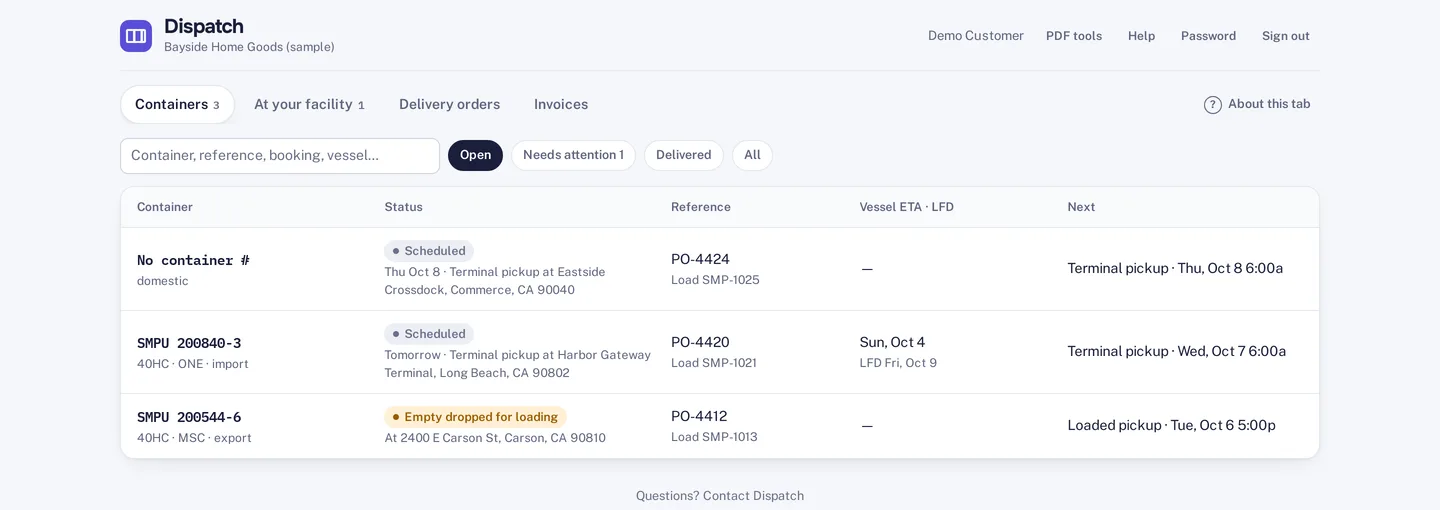
As volume grows, much of the office day goes to “where is my container” calls. Dispatch Board gives customers a portal with their loads, documents, projected charges, hot and ready-to-return dates and invoices. They can upload delivery orders themselves, or you can send a public tracking link that needs no login. Status emails and WhatsApp messages go out from the load, and an embeddable tracking widget can sit on your own website.
The customer portal is on the Medium plan and above.

The Problems tab collects holds, last free days, late moves and missing information in one list. Container tracking through Terminal49 keeps availability and last free day up to date, and vessel arrival alerts come from five AIS providers using your own provider key. Port closures and empty return restrictions are stored by terminal, line, size and date, and street turn and dual transaction suggestions respect them.
When per diem is charged anyway, each day carries a reason, so the cost goes to the right place: the customer through a rebill, the line through a dispute letter with a packet of tracking events, appointments and closures. Chassis bills are checked against your own dates, and a missed-charge finder looks for accessorials you did not bill.
A growing fleet usually mixes employee drivers, owner-operators and partner carriers. Settlements cover all three, with deductions carried forward until they are cleared. Factoring entries, advances and reserves are recorded in the same place. Drivers see their own settlements and PDF statements in the driver app, which cuts the questions about pay that arrive by text.
Settlements are on the Medium plan and above. Fleets in British Columbia can add the BC port compliance add-on at $79 a month, which keeps the rate order in the board, runs a pay check each period against what you paid and prepares a file for the Commissioner. It starts from the published 1 July 2026 figures, so confirm them against the current order.
Billing runs from the completed load into a queue, then invoices, credit memos and payments, with credit limits, aging and collections per customer. QuickBooks Online and Xero sync is available. Reports show profit per load, per truck and per customer, and you can build custom reports and schedule them by email. The Money Check boils per diem, chassis and detention leaks down to one figure.
Each company has its own database, files and logins. Two-factor sign-in is available, and the country of each sign-in is shown. IFTA reports with fuel card imports, DVIR inspections, maintenance schedules by miles or date with work orders, a compliance calendar for expiries and driver scorecards are included. GPS arrives from Samsara, Motive or One Step GPS. A public API and webhooks are on the Fully loaded plan.
Medium is $349 a month in Canadian dollars and includes 15 trucks, with extra trucks at $12 each up to 40. Fully loaded is $699 and includes 30 trucks, with extras at $10, and adds container tracking, the AI assistant, the orders inbox, the public API and brokerage. Everything is month to month, and paying a year up front gives two months free and guided onboarding. See the pricing page for what each plan includes.
Load a week of real moves for two or three dispatchers, run Plan day against the way you planned it by hand, and upload a recent chassis invoice. Dispatch Board does not book terminal appointments automatically, has no EDI and does not sync with QuickBooks Desktop, so check those against your needs early.
Self sign-up gives you a company with sample data and a get-started checklist, so you can look around before you enter anything of your own. Then bring in your real freight: import drivers, trucks, chassis, customers, rate tables and loads from Excel, CSV or a PDF rate sheet. The importer matches columns by heading, checks every row before saving and flags duplicates.
Add your terminals and their gate hours, invite your drivers to the driver app, and run a real week alongside your current system. The Help Center has a guide for every screen. A bar at the top of the board shows the days left in the 14-day trial, and the account owner gets an email two days before it ends. Plans are month to month, and you can download a backup file and a CSV of your loads at any time.
Questions
Yes. Settlements cover employee drivers, owner-operators and carriers, with deductions carried forward. Carriers can also have a portal for brokered loads and their invoices.
Yes. The customer portal shows loads, documents, projected charges and invoices, and public tracking links need no login. The portal is on the Medium plan and above.
As many as you need. Dispatcher and admin logins are unlimited on every plan, and driver, customer and carrier logins are free.
Yes. Profit per load, per truck and per customer is reported, and custom reports can be scheduled.
Import drivers, trucks, chassis, customers, rate tables and loads from Excel, CSV or a PDF rate sheet. Guided onboarding is free with an annual plan and $999 one time on a monthly plan.
Owner-run fleets of a few trucks leaving spreadsheets behind.
Carrier portal, tracking links and billing both ways.
Pay for drivers, owner-operators and carriers.
Every company gets 14 days free with no card. Import a week of your own freight and judge it yourself.