Guide
What is per diem in drayage?
The daily equipment charge that quietly eats margin: how it starts, how days are counted, who pays and how to rebill or dispute it.
Guides / Starting out
Eight steps from business number to first invoice, with pointers to where each current rule is published and the mistakes new carriers repeat.
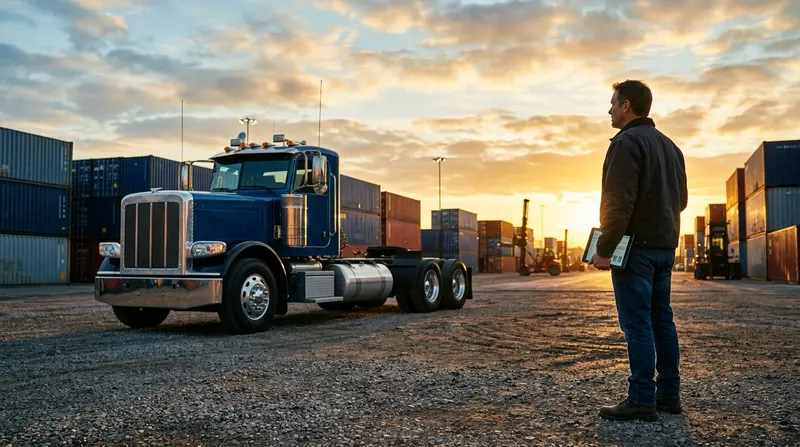
Drayage is short-haul container trucking: pulling a loaded import container out of a port terminal or rail ramp and delivering it, bringing the empty back, and doing the reverse for exports. A typical day is a handful of moves, each with gate waits, appointments, equipment you do not own and dates that cost money when you miss them.
Your customers are mostly importers, exporters, freight forwarders, customs brokers and brokers who arrange the trucking. The shipping line owns the container and usually decides where the empty must go. The chassis often belongs to a pool. You sell the truck, the driver and the reliability, so the business lives or dies on dispatch discipline and on billing everything you are entitled to bill.
Two cautions up front. This is general information, not legal, tax or insurance advice. Rules differ by province and port, so each step below points to where you confirm the current requirement.
Choose a structure (sole proprietor, partnership or corporation) and talk to an accountant or lawyer about which suits your risk and tax position. Register the business name where you operate. The federal Canada business start-up pages explain the basics, and in British Columbia the BC Registries handle incorporation and name registration.
Then register for a Business Number with the Canada Revenue Agency and ask about GST/HST. Whether and when you must register depends on your revenue and the kind of services you supply, so check the current rule with the CRA. If you will hire drivers as employees, you also need payroll accounts and need to understand source deductions. If you will use owner-operators, learn how your province and the CRA distinguish contractors from employees before you sign anything.

Every province runs its own registration and safety process for commercial carriers, built on the National Safety Code. Typically you will register as a carrier, meet vehicle inspection and driver record requirements, and keep files on drivers and maintenance. The names and thresholds differ between provinces, so start at your provincial transportation ministry and ask what applies to your trucks and your routes.
For Vancouver port work in British Columbia there is an additional layer. The Container Trucking Act requires a Container Trucking Services licence, issued by the Office of the BC Container Trucking Commissioner, for container trucking that needs access to a marine terminal in the Lower Mainland. The licence comes with minimum pay rules for drivers. Read the current licence terms and rate order at the OBCCTC before you quote a rate or hire a driver, because your costs follow from them.
Ask a commercial trucking insurance broker to quote your exact operation. Typical coverages to discuss are commercial auto liability, cargo, general liability and coverage for equipment you do not own while it is in your care. Pools and shipping lines set minimum insurance for anyone interchanging their equipment, so ask each one what they require before your first move. Insurance is often the largest fixed cost of a new carrier, and brokers can tell you how your driver experience and routes change the price.
Each port and terminal sets its own access rules. Expect to need truck and driver credentials for the ports you serve, gate or appointment system accounts, and in some places a transponder or tag on the truck. If you cross into the United States for port work, drivers need the credentials that US facilities require, such as a Transportation Worker Identification Credential for some US maritime facilities. Ask the port authority and each terminal for their current requirements, and allow for processing time in your launch plan.
Most drayage carriers run day-cab tractors. You generally do not buy chassis: pools and lines supply them and bill by the day, so you need accounts and a process to check those bills. Decide whether to buy, finance or lease tractors, and budget for maintenance, tires, and downtime. A small, reliable fleet beats a large, unreliable one while you learn the terminals.
Employee drivers cost more in payroll, training and supervision but give you control. Owner-operators bring their own truck but need clear contracts, and in regulated ports like Vancouver both groups come with pay minimums. Whichever you choose, keep a driver file with licence, abstract and certifications, a written pay agreement, and a way to settle pay accurately every period. Pay mistakes cost you drivers faster than anything else.
Quote a base rate by zone or distance, a fuel surcharge tied to a published diesel price, and a list of accessorials: chassis fees, pre-pull, storage, waiting time, dry runs, tolls and extra stops. Put free time and billing increments in writing. Our guide to building a drayage rate sheet shows a structure you can copy into a spreadsheet.
An illustration with made-up numbers: if a driver waits two extra hours at a customer every day and you do not bill it, that is ten unpaid hours a week on one truck. Small leaks like that, repeated across chassis days, per diem and short stops, are what separate profitable new carriers from the ones that stall.
Customers pay on terms, often 30 days or more, while drivers, fuel, insurance and chassis bills are due sooner. Plan for working capital to cover that gap. Some carriers use factoring to turn invoices into cash sooner at a cost, and some negotiate faster terms with key customers. Bill promptly, with proof of delivery attached, and chase aging invoices early.
Usually not. Most drayage carriers use chassis from pools or shipping lines and pay a daily rate. You do need accounts with the providers and a way to check their invoices.
Yes, many carriers do, including owner-operators who start by hauling for another carrier. A single-truck business still needs insurance, registration, and good records, and any port-specific licensing for the terminals you serve.
For container trucking that needs access to a marine terminal in the Lower Mainland, the OBCCTC says a CTS licence is required. Check the current licensing information on the OBCCTC site.
Most carriers register for GST/HST, but when you must register and whether a particular move is taxed or zero-rated depend on the facts. Confirm with the Canada Revenue Agency or your accountant.
At minimum you need a way to dispatch, record times and documents, bill accurately and settle driver pay. You can start with a spreadsheet, but per diem dates, chassis days and driver pay get hard to track as you grow.
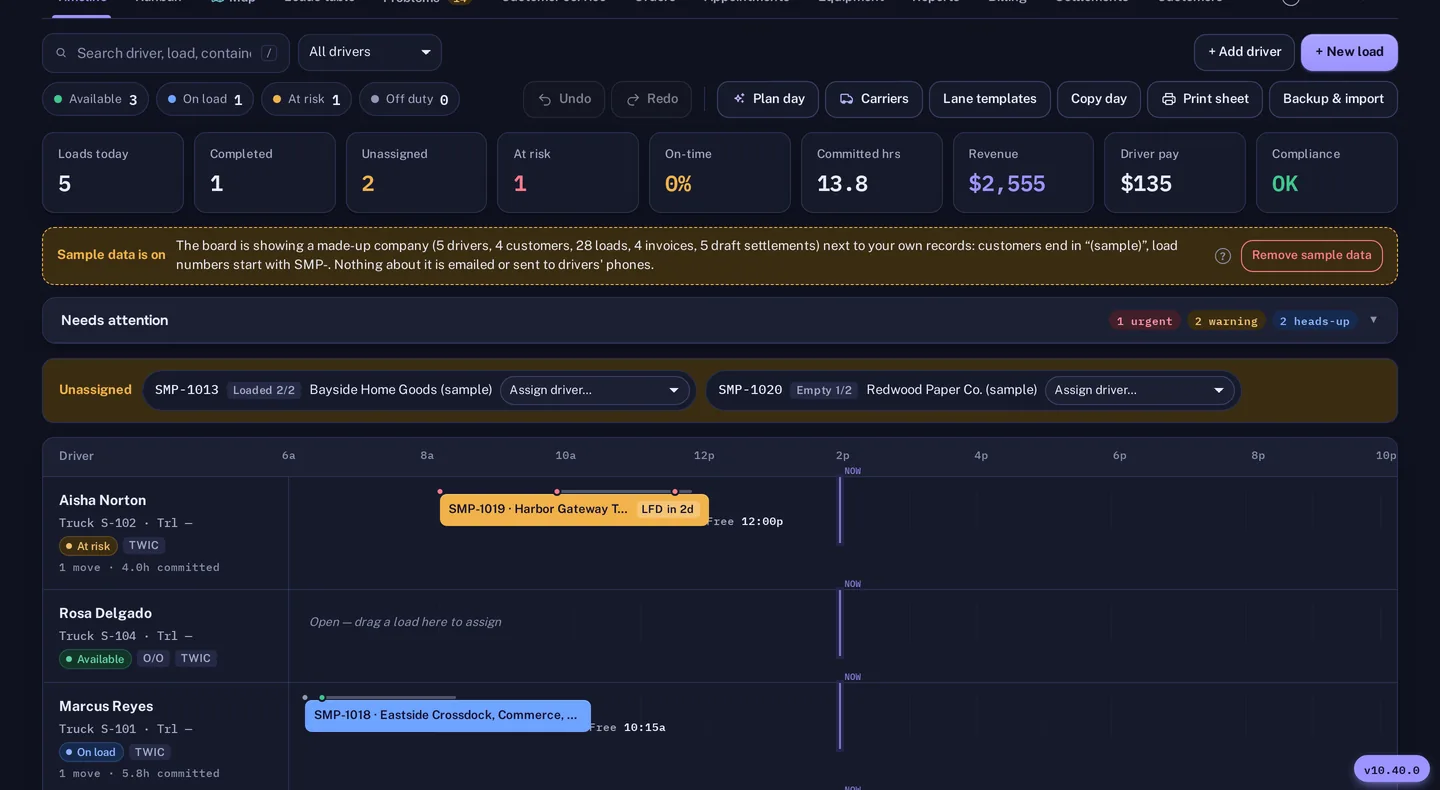
Dispatch Board is built for small container trucking companies. It gives you a dispatch board with timeline, Kanban and map, container tracking through Terminal49 for last free day, a driver web app for photos and signed PODs that works offline, rate profiles and accessorial rules, a billing queue, and settlements for employee drivers, owner-operators and carriers. It also handles Canadian dollars and GST, HST, QST and PST.
You can import your drivers, trucks, customers and rates from Excel or CSV, and try it free for 14 days on your own freight. It does not book terminal appointments for you automatically, and it does not support QuickBooks Desktop or EDI.
This guide is general information from the Dispatch Board team, not legal, tax or accounting advice. Rules and rates change: confirm against the official source linked in the text before you rely on them.
Keep reading
Guide
The daily equipment charge that quietly eats margin: how it starts, how days are counted, who pays and how to rebill or dispute it.
Guide
Who needs a CTS licence, how the rate order is structured and a period-by-period pay check, with links to the official OBCCTC pages.
Guide
Base rates, fuel surcharge, accessorials and terms in a layout you can copy into a spreadsheet, with a worked quote.
Product
Product
Start a 14-day trial and import your drivers, trucks and customers from Excel or CSV.